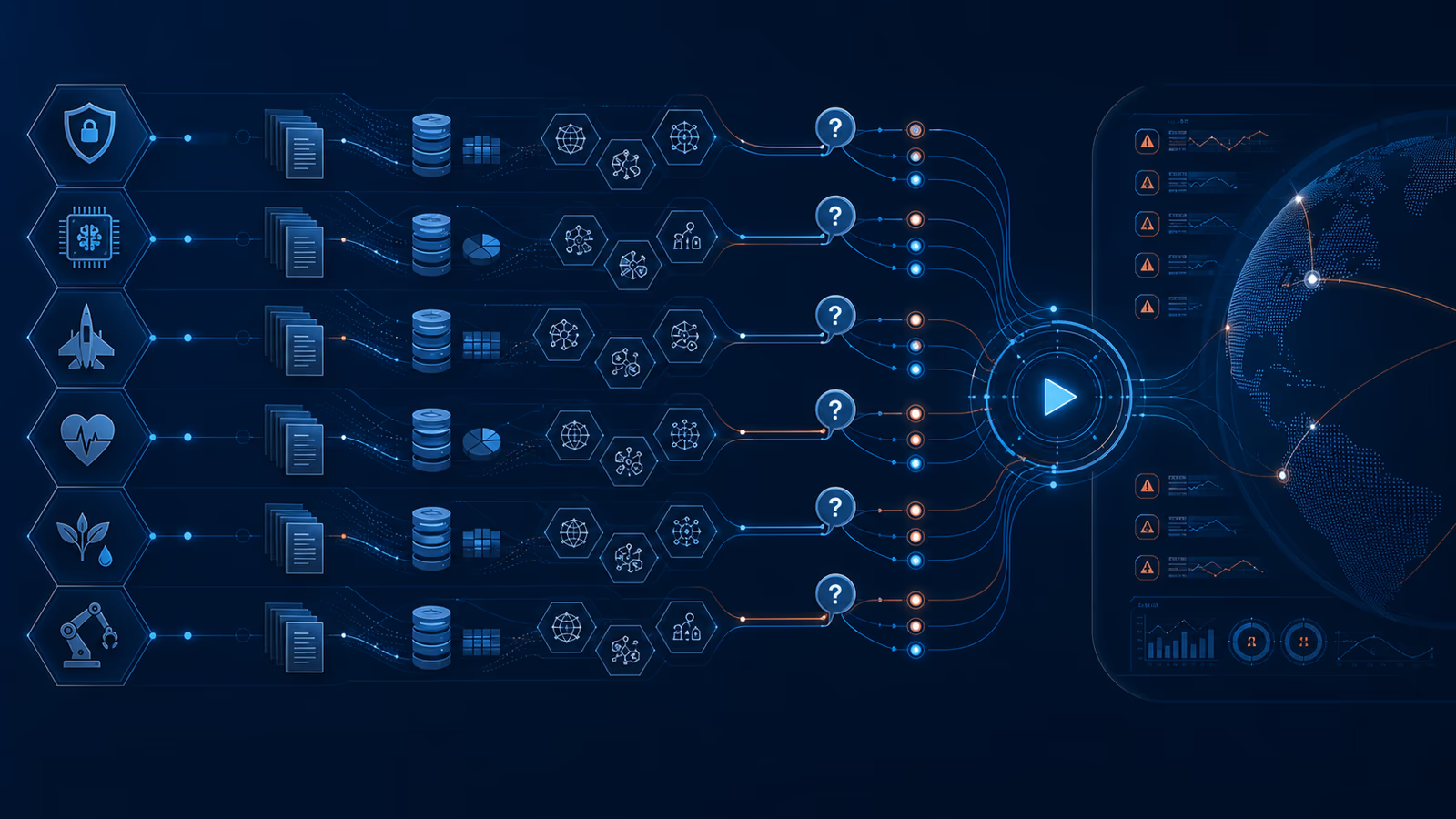
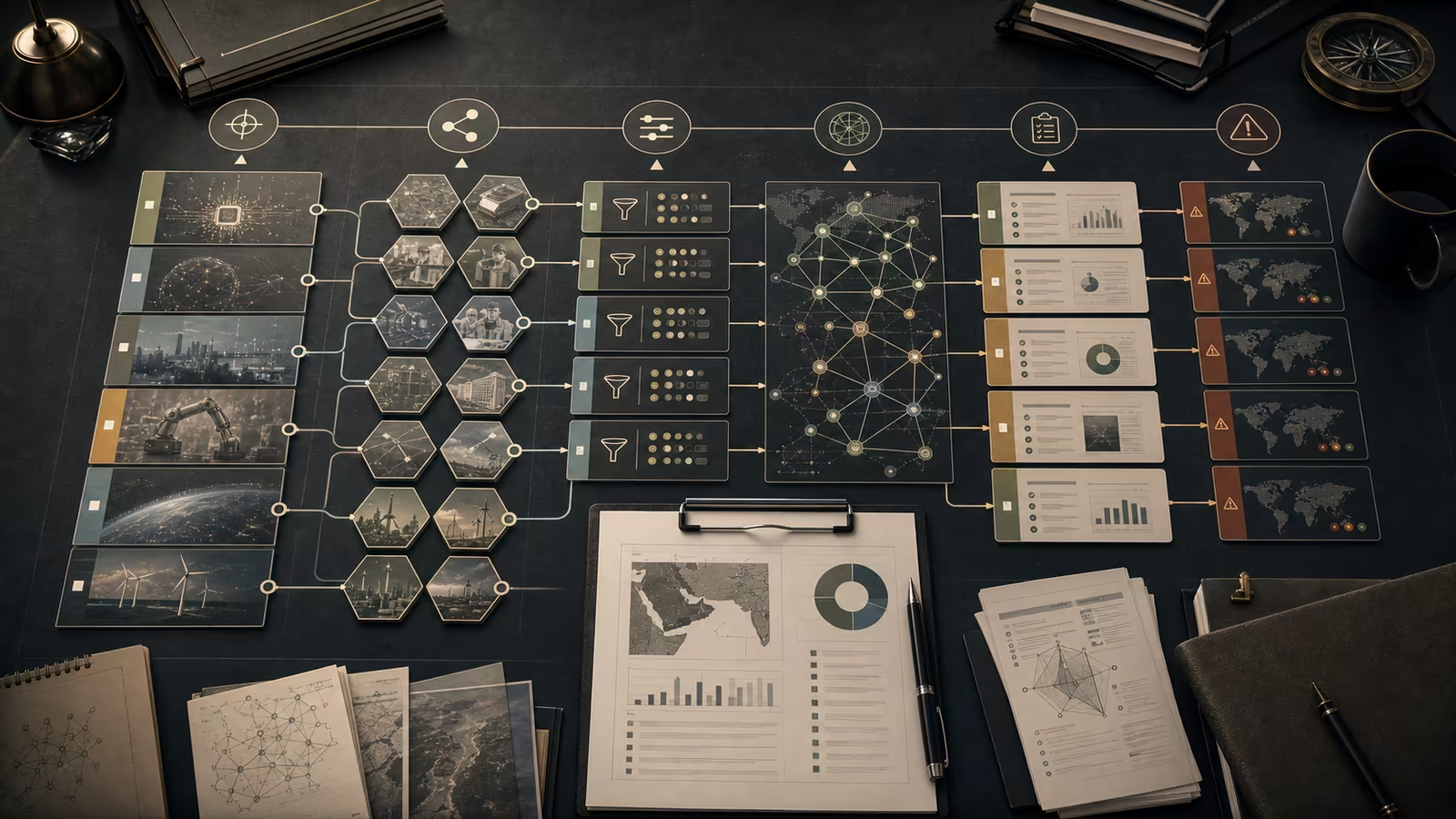
Use playlists to connect thesis, market, and diligence
A playlist is useful only if it does more than group links. The goal is to move from a broad thesis to a testable research path. Israeli cyber, AI infrastructure, defense industrial capacity, health readiness, food and water resilience, robotics, and semiconductor-adjacent infrastructure all sound strategically important. The playlist asks a narrower question: what should the reader study first, which database sectors should be compared, which Dependency Atlas priorities explain the strategic need, which diligence questions matter, and which risks should stay visible while the theme is exciting?
This matters because strategic themes can become too large to underwrite. "Sovereign AI" might involve cloud regions, model evaluation, data rights, cyber defense, chips, energy, procurement, privacy, and public-sector budgets. "Defense industrial depth" might include sensors, communications, munitions-adjacent supply, simulation, software, autonomy, rugged hardware, sustainment, and export controls. "Labor substitution" might include robotics, fleet operations, field service, safety, liability, and customer workflow redesign. A playlist breaks the theme into reading order so the user does not mistake a macro need for a specific company thesis.
The right reading order starts with the problem, then moves to sectors, then to companies. A reader studying food, water, and ag resilience should first understand the bottleneck: yield, labor, monitoring, cold chain, water loss, feed security, or industrial continuity. Only then should the reader compare companies. A reader studying defense industrial depth should separate field validation from procurement adoption. A reader studying health readiness should keep clinical evidence, reimbursement, privacy, and institutional workflow in view. Each playlist is a guardrail against category drift.
A useful playlist narrows broad strategic interest into a bounded research memo and a clear next evidence request.
From reading path to research memo
After following a playlist, the reader should be able to write a short memo with five parts. First, define the thesis in one or two sentences without buzzwords. Second, name the buyer and the operating pain. Third, identify the evidence needed before any investment, partnership, or further research step. Fourth, list the regulatory, financing, procurement, or reputational issues that require adviser input. Fifth, name the reasons to stop. This memo discipline is more useful than saving a long list of interesting companies because it forces the theme to become falsifiable.
The playlists also prevent overfitting to one success story. Wiz does not make every cloud security company durable. Mobileye does not make every autonomy company inevitable. A defense pilot does not make every dual-use product procurement-ready. A large AI round does not prove that every model wrapper owns a workflow. A semiconductor dependency does not mean every chip-adjacent startup can scale. The playlist format keeps famous outcomes, sector pages, dependency themes, and current company evidence in separate lanes so each can do its proper job.
For institutions, the output may not be an investment at all. A corporate team may use a playlist to design a scouting project. A public-sector researcher may use it to identify which bottlenecks need policy support. A family office may use it to compare whether direct deals, funds, public markets, or a wait-and-learn approach fit its governance. A founder-call prep may end with a decision not to proceed because the regulatory surface is too uncertain. That is still a good research outcome. The point is to increase decision quality, not to manufacture activity.
Keep the risk lens attached to every theme
Each playlist includes risks because thematic conviction can hide operational weakness. Cyber categories can be crowded even when security risk is rising. AI infrastructure can be important while margins are pressured by compute cost and support burden. Defense technology can have urgent users but slow procurement. Health readiness can be mission-critical but blocked by clinical evidence, reimbursement, and privacy review. Food and water resilience can have strong social value but difficult hardware economics. Robotics can solve labor scarcity while support costs destroy margins. Semiconductor infrastructure can be strategically important while depending on foreign-controlled manufacturing bottlenecks.
Keeping the risk lens attached does not make the site pessimistic. It makes the learning path useful. A strong theme should survive sharper questions. If it cannot, the reader has learned something before capital, reputation, or time is committed.
Risk also changes as the reader moves through the playlist. At the thesis stage, the risk may be that the theme is too broad. At the sector stage, it may be that buyers are slow or budgets are fragmented. At the company stage, it may be product maturity, customer concentration, round structure, or management execution. At the transaction stage, it may be valuation, rights, tax, eligibility, sanctions, export controls, data handling, or reporting. A playlist that keeps those layers visible helps the reader avoid importing confidence from one layer into another.
The practical test is whether the reader can explain why the next page matters. If the answer is only "because it is interesting," the playlist is still too loose. If the answer is "because this sector page names the buyer," "because this atlas theme describes the bottleneck," "because this checklist names the evidence request," or "because this risk page tells me which adviser question to raise," the playlist is doing its job.
A finished playlist should produce one of three outcomes: continue with a tighter research question, pause because the evidence is not ready, or stop because the theme no longer fits the reader's route. All three outcomes are useful. What the playlist should not produce is a vague sense that a theme is important and therefore actionable. Importance earns study; evidence earns the next step.
The user can then return to the database with a cleaner filter. Instead of browsing every company in a hot sector, they can search for the specific control point, customer type, maturity level, or risk profile that the playlist surfaced. That is the difference between discovery and diligence. Discovery expands the map; diligence narrows the question until the next evidence request is obvious.
That narrowing step is where a broad strategic site becomes useful to a serious reader. It turns curiosity into a bounded research task that can be completed, challenged, and updated.
Israeli Cyber Investor Playlist
Read these guide pages
Cybersecurity sector page
How Israeli Startup Investing Works
Cyber diligence checklist
Explore these database sectors / filters
Cybersecurity database sector
Priority-signal and dual-use filters
Review these Dependency Atlas themes
Sovereign cloud, compute, and software resilience
Ask these diligence questions
Who owns the CISO budget?
What proof exists in production?
What platform could bundle this?
Watch these risks
Crowded category
Incumbent bundling
Generic AI language
Suggested next step: Build a short list of five cyber companies and compare deployment evidence.