How to use the Startup Database as an investor.

The database helps investors research Israeli companies, funds, public-market context, defense primes, acquired assets, ecosystem references, and strategic themes. It is not a list of recommendations.

Read entity type, source freshness, score language, and status carefully before comparing entries or contacting anyone.

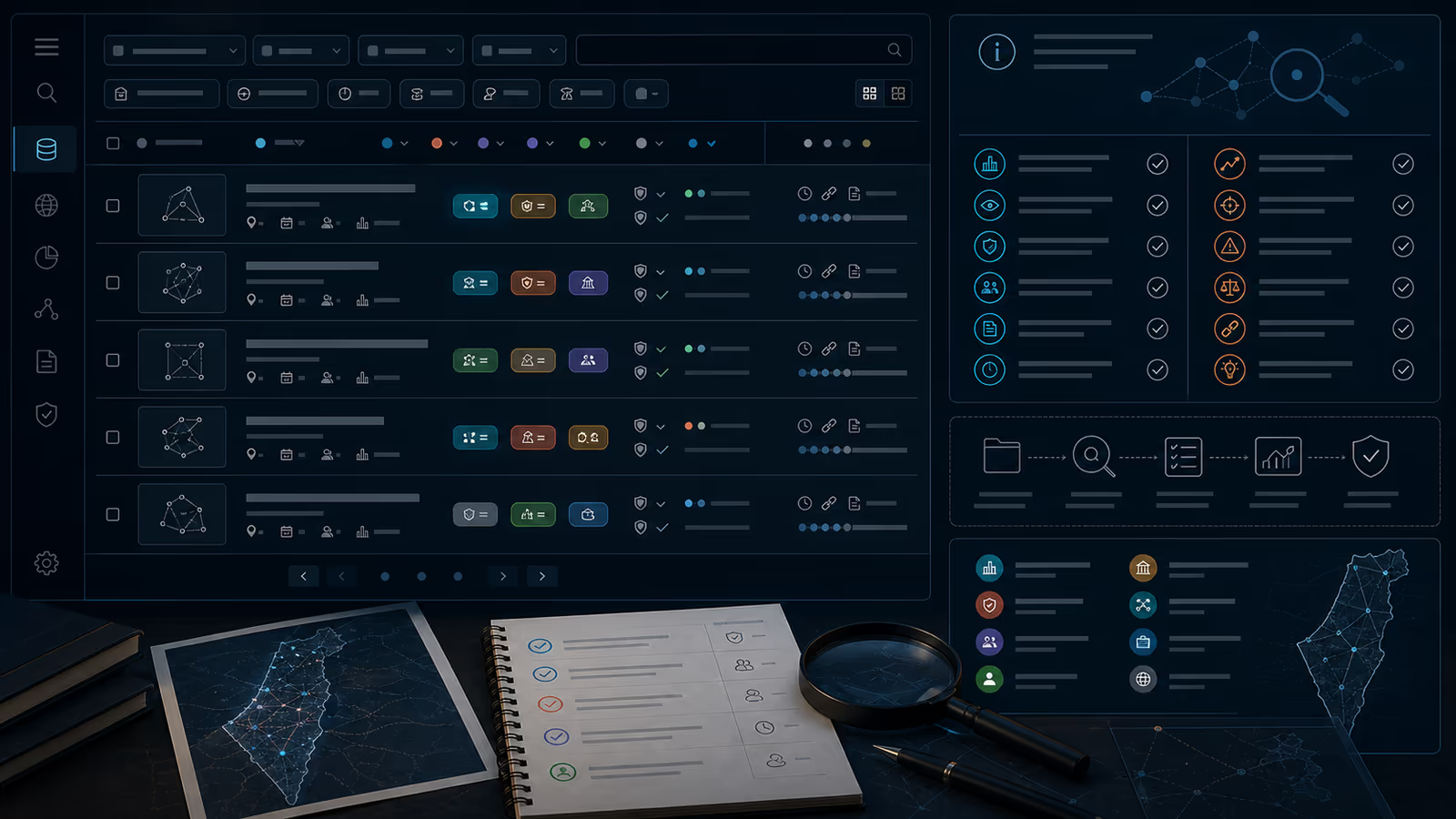
Abstract database interface with entity-type badges, source verification icons, timestamp markers, score-signal dots, and diligence checklist panels.

The database is not a list of recommendations.

Inclusion means an entry is relevant to Claw & Talon research, ecosystem mapping, sector context, or thesis-building. It does not imply endorsement, partnership, investment, sponsorship, allocation availability, current fundraising, or suitability.

Scores are research relevance signals, not investment ratings.

Potential score, research relevance score, strategic relevance signal, priority signal, and similar labels are editorial comparison tools. They are not ratings, recommendations, suitability assessments, allocation signals, or return predictions. They may be based on incomplete public information.

Entity types need to be interpreted differently.

A private startup, public company, acquired asset, fund, defense prime, government-owned company, ecosystem reference, defunct company, and non-Israeli strategic reference do not represent the same exposure route. Do not treat them as interchangeable private startup opportunities.

Priority signal means worth researching in the thesis, not investable.

A priority signal means an entry may be important to Claw & Talon sector or strategic research. It does not mean the company is raising, available, suitable, endorsed, or likely to produce returns.

Dual-use does not mean automatic demand.

Dual-use means a product may apply across commercial and government, defense, public-safety, or resilience contexts. It does not prove procurement demand, government adoption, export eligibility, or commercial-market scale.

Public-source profiles may be incomplete or stale.

Investors must independently verify current company status, funding, customer traction, legal eligibility, valuation, terms, regulatory issues, source recency, and whether the company is still active.

Translate database signals into diligence questions.

Sector first

Start with a sector, not a company.

Use sector pages and the Dependency Atlas to define the buyer, evidence standard, exposure route, and failure modes before shortlisting companies.

Entity type

Compare company type before comparing scores.

A fund, public company, acquired asset, defense prime, and startup may all matter to a thesis, but they do not create the same investment question.

Evidence

Open the checklist before outreach.

Use the relevant checklist to ask about customers, revenue, funding, team, product claims, current status, regulatory exposure, and cap table.

Atlas

Use the Dependency Atlas to build a thesis.

Translate each priority into sector, company type, buyer, evidence needed, risk, and likely exposure route before assuming it is investable.

Sources

Use sources and timestamps carefully.

Check whether public sources are primary, recent, and relevant. Treat missing or old sources as a diligence gap, not as confirmation.

Discipline

Separate strategic importance from return potential.

A technology can matter to Israeli resilience while still being a poor venture outcome, inaccessible security, mature public company, or non-investable reference.