
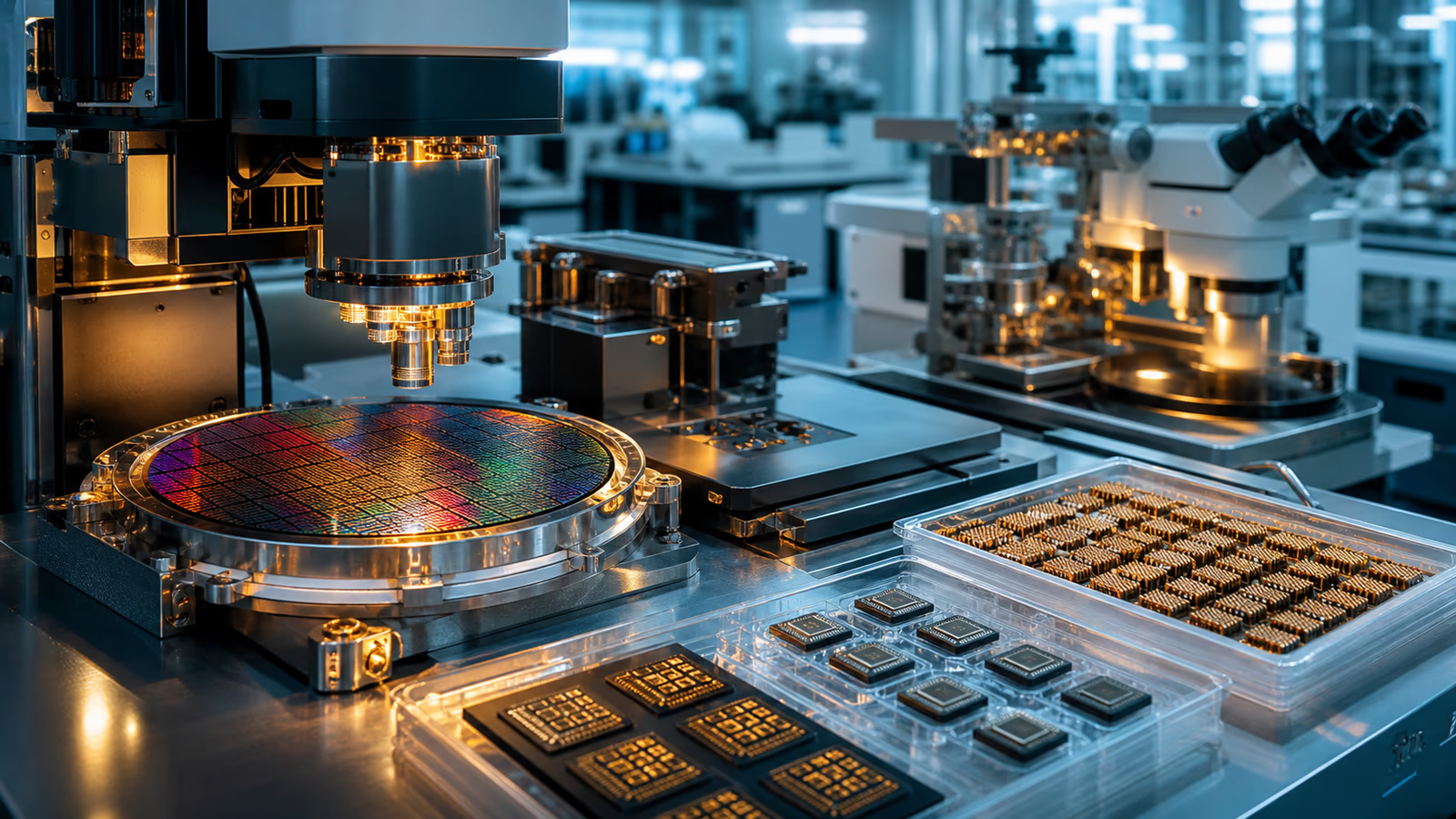
Israel is genuinely strong in semiconductors, but it is strong in specific layers of the stack. Design talent, sensing, photonics, defense electronics, and deep technical tooling are real advantages. Owning the whole global fabrication chain is not.
That distinction matters. When investors hear chip sovereignty, it is easy to jump to giant fabs and national prestige projects. The Atlas points to a more grounded answer. Israel is exposed to external foundries, lithography bottlenecks, and electronics imports, so the smart move is to deepen the parts of the stack it can realistically control.
Advanced packaging, test, metrology, photonics, trusted electronics, defense-grade sensing, and the software layers around chip development all fit that logic. They improve resilience without pretending the country can replicate Taiwan or the Netherlands end to end. That makes the strategy more credible and, in many cases, more investable.
What pressure is this solving?
This priority is driven by concrete points of dependency that are already visible in the atlas. The goal is not abstract independence. The goal is to remove the narrowest bottlenecks first, then build more room to operate when the system is under stress.
Advanced foundry capacity for high-end chips
Access to leading-edge fabricated chips still runs through a heavily Taiwan-centered global foundry stack.
- Vulnerability
- 87
- Importance
- 90
- Category
- Semiconductors & Electronics
Electronics, power equipment, and batteries imports
This chapter bundles the electronic substrate beneath telecom, compute, mobility, and defense systems.
- Vulnerability
- 80
- Importance
- 95
- Category
- Semiconductors & Electronics
Advanced lithography and chipmaking equipment
The Netherlands sits at a key choke point for leading-edge lithography tooling through ASML.
- Vulnerability
- 77
- Importance
- 84
- Category
- Semiconductors & Electronics
Medical and sensing equipment imports
Medical devices and advanced sensors are dual-use resilience goods.
- Vulnerability
- 76
- Importance
- 92
- Category
- Semiconductors & Electronics
What should the capital actually fund?
A useful resilience investment thesis needs to be concrete. These are the moves the atlas points to for this theme.
- Expand advanced packaging, board-level trust, qualification, radiation-hardening, and test capacity for defense and critical infrastructure.
- Back fabs only where they fit Israeli scale, talent, water/power realities, and dual-use anchor demand.
- Support lithography-adjacent software, metrology, photonics, power electronics, sensing, and secure supply-chain verification.
Why can this make money?
The return case here is strong because these niches can carry real technical defensibility. Customers pay for performance, reliability, security, and integration into critical systems. That is especially true when the product touches defense, communications, medical devices, or high-end compute.
Investors should think less about headline size and more about choke-point power. A company that becomes essential in packaging, test, sensing, or chip-design workflow can be strategically important and commercially valuable without ever becoming a giant commodity manufacturer.
How to use this case responsibly
Treat this page as an editorial bridge between the Dependency Atlas and company-level diligence. It identifies a strategic pressure point, explains why the pressure may create durable demand, and points to the kinds of capabilities that could reduce dependency. It does not rank securities, confirm current fundraising, endorse any company, or imply that a reader can access a specific allocation.
Before relying on the theme, check the cited dependency records, compare the suggested actions with current procurement and commercial demand, and separate companies with verified traction from companies that are only adjacent to the problem. The strongest opportunity is usually not the company with the loudest resilience language. It is the one with a clear buyer, defensible technical proof, reliable delivery economics, and a role that remains useful when the original scenario changes.
Use the score and rank as a starting point, then test whether the proposed capability would still matter if the dependency source, timing, or severity changed. A resilient thesis should survive more than one scenario and should be supported by sources that readers can inspect directly.
Bottom line
The right semiconductor thesis for Israel is not bigger for the sake of bigger. It is sharper, more selective, and aimed at the layers the country can truly own.