
Medicine shortages are different from most supply-chain problems. When a shipment slips, the cost is not just higher prices. It can mean treatment delays, hospital stress, and a system that suddenly has no margin for error.
The Atlas ranks pharmaceuticals near the top because medical dependence is both broad and unforgiving. Finished drugs, active ingredients, sterile injectables, and cold-chain handling all matter at the same time. If even one layer is thin, the whole response system becomes fragile.
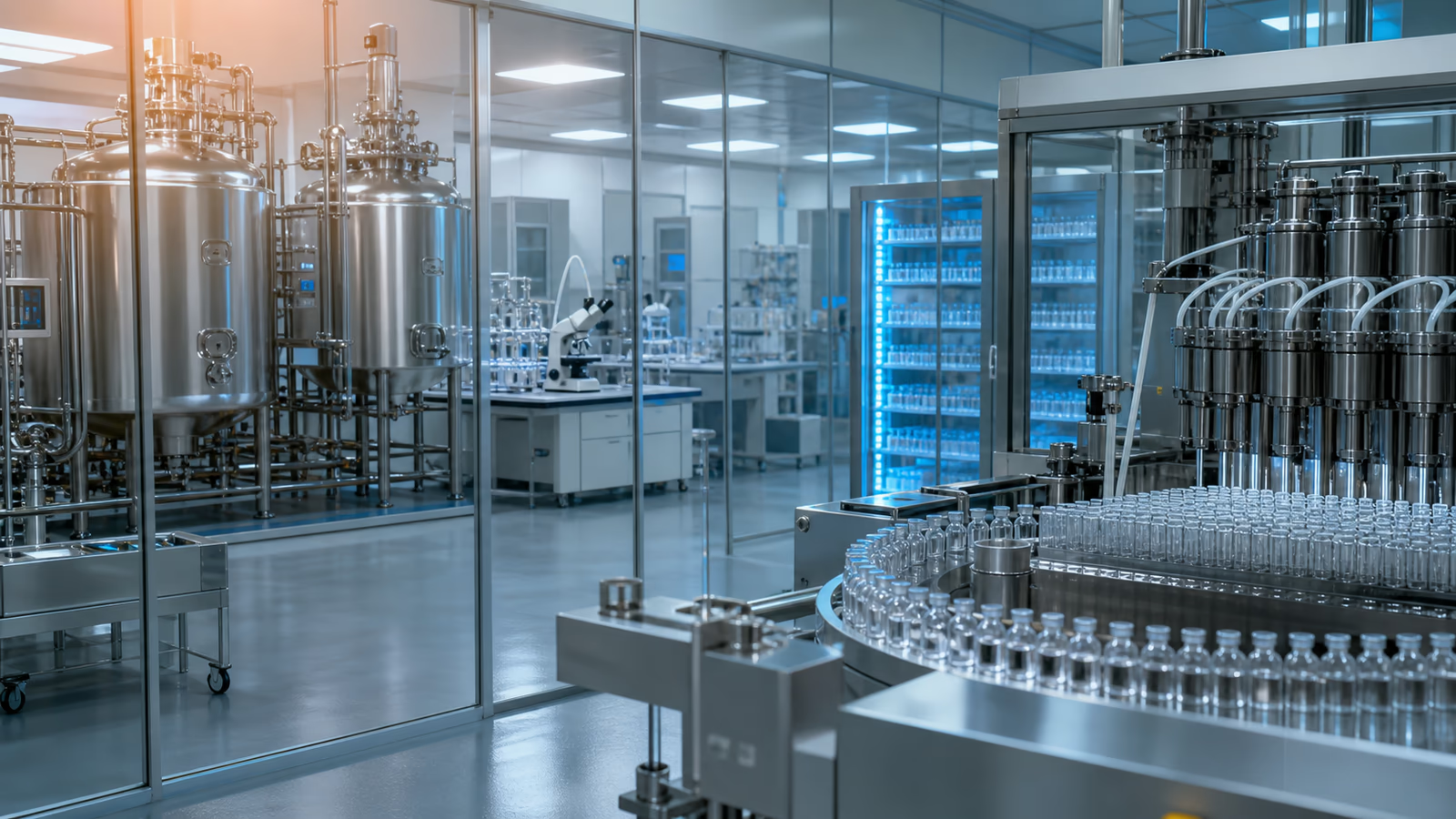
That does not mean Israel should try to manufacture every drug domestically. It means the country should identify the medicines and production steps that matter most in emergencies, then make sure those capabilities exist locally or can be switched on quickly. Essential generics, hospital-critical injectables, flexible fill-finish capacity, and emergency stockpiles are the practical places to start.
What pressure is this solving?
This priority is driven by concrete points of dependency that are already visible in the atlas. The goal is not abstract independence. The goal is to remove the narrowest bottlenecks first, then build more room to operate when the system is under stress.
Chemical intermediates imports
Organic intermediates affect pharma, specialty chemicals, and industrial formulation.
- Vulnerability
- 75
- Importance
- 86
- Category
- Pharma & Chemicals
Finished medicines and APIs imports
Drug security is a direct resilience issue for hospitals, chronic care, and emergency response.
- Vulnerability
- 68
- Importance
- 95
- Category
- Pharma & Chemicals
Finished medicines and APIs imports
Drug security is a direct resilience issue for hospitals, chronic care, and emergency response.
- Vulnerability
- 67
- Importance
- 95
- Category
- Pharma & Chemicals
Finished medicines and APIs imports
Drug security is a direct resilience issue for hospitals, chronic care, and emergency response.
- Vulnerability
- 66
- Importance
- 95
- Category
- Pharma & Chemicals
What should the capital actually fund?
A useful resilience investment thesis needs to be concrete. These are the moves the atlas points to for this theme.
- Prioritize APIs, essential generics, hospital-critical injectables, diagnostics, blood products, and antidote-adjacent capabilities.
- Add flexible fill-finish, packaging, quality-control labs, and resilient cold-chain capacity inside Israel.
- Tie procurement guarantees and HMO purchasing to domestic emergency manufacturing lines with surge drills.
Why can this make money?
For investors, this theme works when it focuses on flexible manufacturing, production software, cold-chain tools, quality systems, and essential product lines with clear procurement demand. These are not vanity projects. They are products and facilities that real health systems, defense establishments, and export markets need.
The commercial angle is straightforward. Health systems everywhere want shorter, more reliable supply chains for critical medicines. Companies that can deliver trusted production, resilient storage, or efficient last-mile cold-chain performance are solving a global problem, not only an Israeli one.
How to use this case responsibly
Treat this page as an editorial bridge between the Dependency Atlas and company-level diligence. It identifies a strategic pressure point, explains why the pressure may create durable demand, and points to the kinds of capabilities that could reduce dependency. It does not rank securities, confirm current fundraising, endorse any company, or imply that a reader can access a specific allocation.
Before relying on the theme, check the cited dependency records, compare the suggested actions with current procurement and commercial demand, and separate companies with verified traction from companies that are only adjacent to the problem. The strongest opportunity is usually not the company with the loudest resilience language. It is the one with a clear buyer, defensible technical proof, reliable delivery economics, and a role that remains useful when the original scenario changes.
Use the score and rank as a starting point, then test whether the proposed capability would still matter if the dependency source, timing, or severity changed. A resilient thesis should survive more than one scenario and should be supported by sources that readers can inspect directly.
Bottom line
Pharma resilience is one of those areas where preparation feels expensive until the day the shortage arrives. After that, it feels cheap.