
Labor dependence rarely gets treated like a strategic risk until the workers stop arriving. At that point, housing slows, farms struggle, and care systems start operating without enough slack.
The Atlas highlights labor substitution because imported labor is built into several sensitive parts of the Israeli economy. Construction, agriculture, and home-based care each depend on worker flows that can be disrupted by politics, war, or recruitment bottlenecks. When that happens, the problem is not abstract. It shows up in delayed projects, lower output, and household stress.
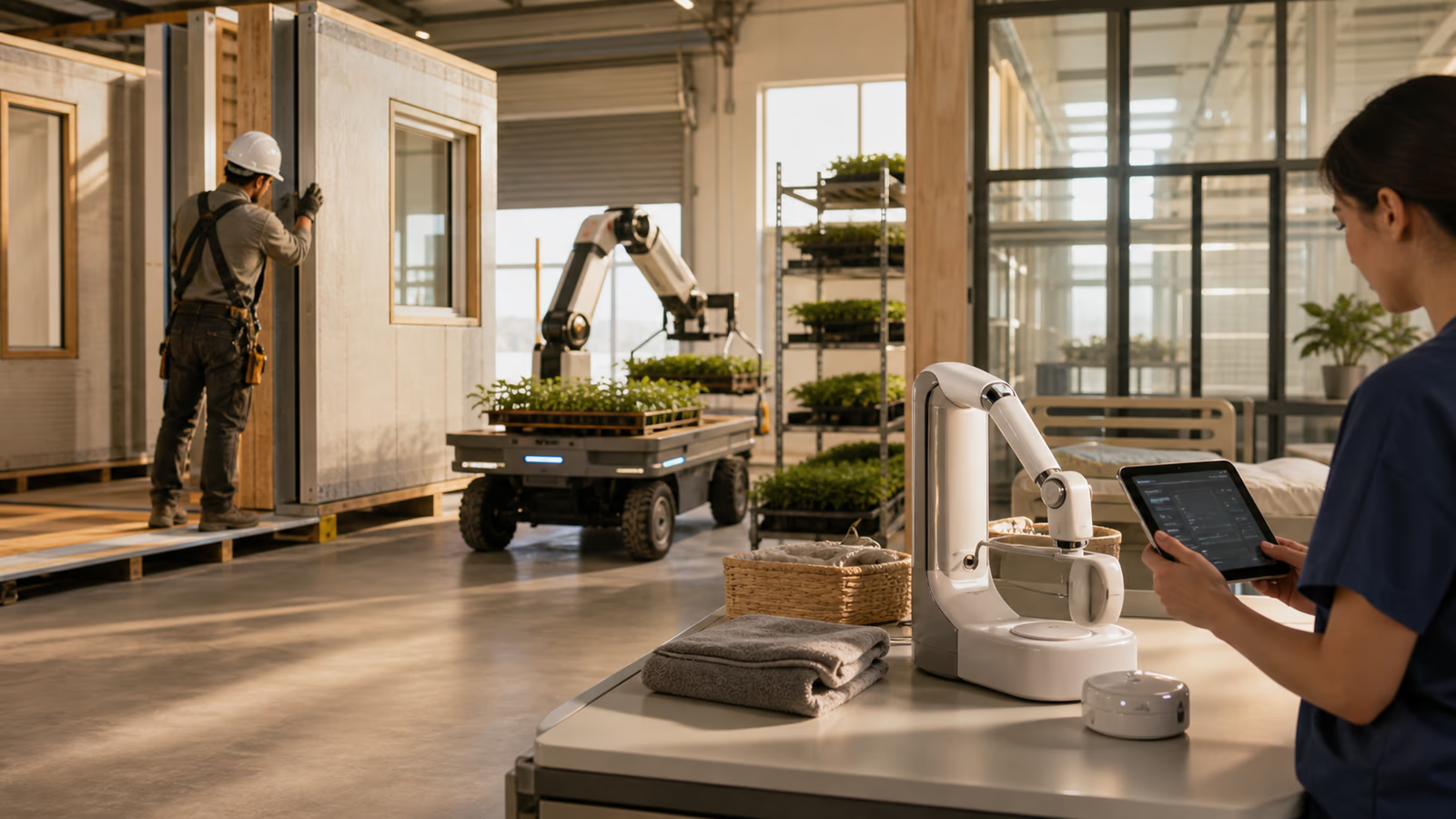
Capital can help by backing technologies that reduce that dependence. Construction robotics, modular building systems, farm automation, assistive-care tools, remote monitoring, and workflow software all make essential sectors less vulnerable to labor shocks. These tools do not remove the need for people, but they lower the systemwide dependence on external recruitment.
What pressure is this solving?
This priority is driven by concrete points of dependency that are already visible in the atlas. The goal is not abstract independence. The goal is to remove the narrowest bottlenecks first, then build more room to operate when the system is under stress.
Agricultural labor force
Thai workers are central to Israel’s farm labor base and therefore to agricultural continuity.
- Vulnerability
- 63
- Importance
- 67
- Category
- Labor
Construction labor backfill
After the sharp reduction in Palestinian labor access, India became a critical backfill source for construction manpower.
- Vulnerability
- 62
- Importance
- 68
- Category
- Labor
Home-based caregiver labor corridor
The bilateral caregiver agreement underscores a persistent dependence on Filipino labor in home-based elder and disability care.
- Vulnerability
- 57
- Importance
- 61
- Category
- Labor
What should the capital actually fund?
A useful resilience investment thesis needs to be concrete. These are the moves the atlas points to for this theme.
- Accelerate construction robotics, prefab approvals, modular building systems, and site-productivity software.
- Deploy ag-tech, autonomous harvesting, greenhouse automation, and farm operations tools to reduce seasonal labor fragility.
- Back assistive-care technology, remote monitoring, and care-workflow platforms to ease caregiver shortages.
Why can this make money?
The business case is stronger than it first appears. Labor shortage is a global problem, not a local one. Builders, growers, and care providers in many countries are all looking for ways to do more with fewer people. Products that help Israel here can find buyers well beyond Israel.
This category also benefits from a simple value proposition. If a tool reduces labor hours, speeds completion, or helps one caregiver support more patients safely, the return on investment can be easy for customers to understand. That usually helps adoption.
How to use this case responsibly
Treat this page as an editorial bridge between the Dependency Atlas and company-level diligence. It identifies a strategic pressure point, explains why the pressure may create durable demand, and points to the kinds of capabilities that could reduce dependency. It does not rank securities, confirm current fundraising, endorse any company, or imply that a reader can access a specific allocation.
Before relying on the theme, check the cited dependency records, compare the suggested actions with current procurement and commercial demand, and separate companies with verified traction from companies that are only adjacent to the problem. The strongest opportunity is usually not the company with the loudest resilience language. It is the one with a clear buyer, defensible technical proof, reliable delivery economics, and a role that remains useful when the original scenario changes.
Use the score and rank as a starting point, then test whether the proposed capability would still matter if the dependency source, timing, or severity changed. A resilient thesis should survive more than one scenario and should be supported by sources that readers can inspect directly.
Bottom line
This is one of the most human themes in the Atlas because it sits right at the point where demography, daily life, and technology meet.