
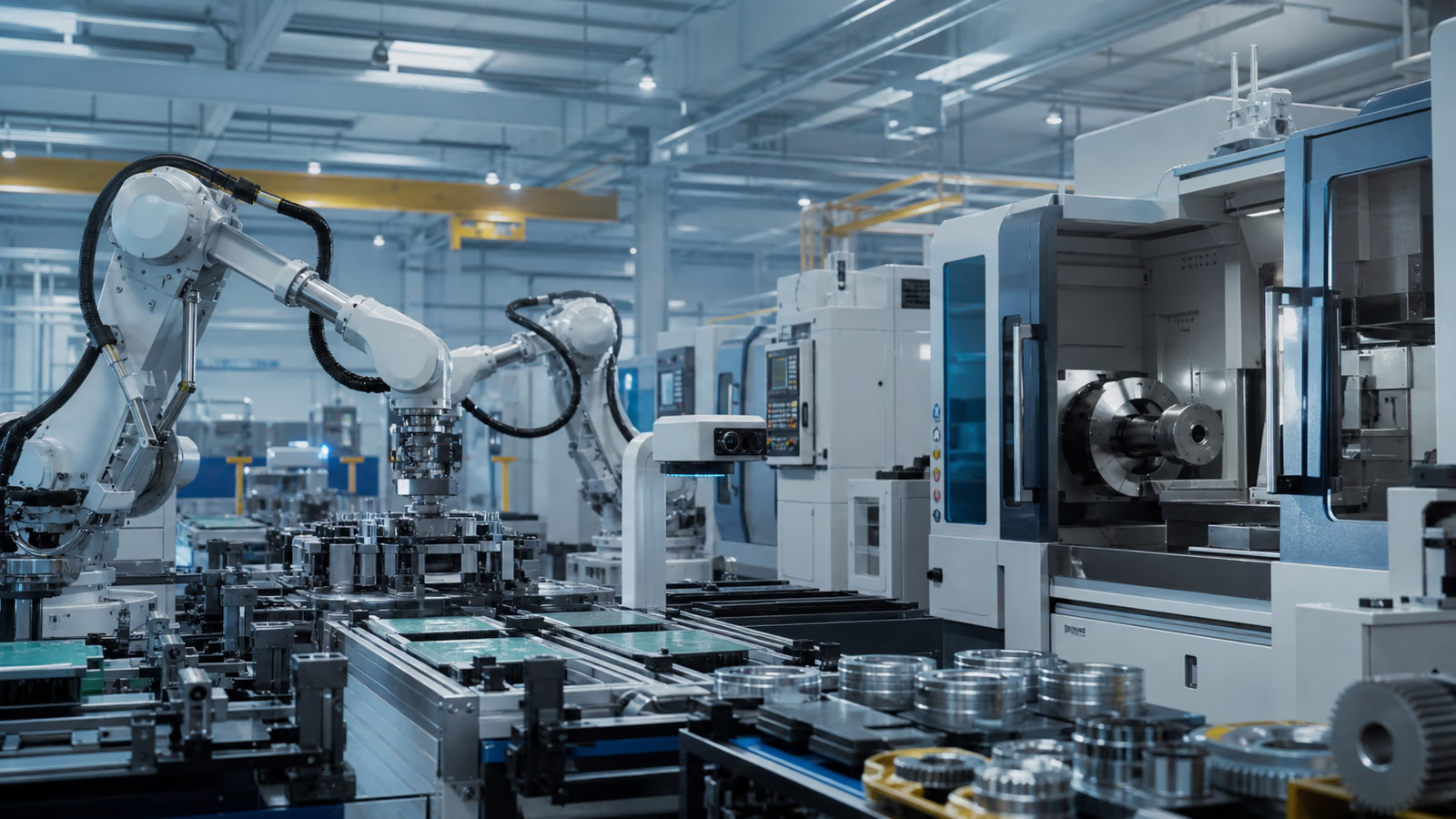
A country can have skilled people and strong demand and still lose output if machines fail, spare parts arrive late, or production lines remain too labor intensive to keep running smoothly under pressure.
That is the core problem behind this priority. Israel imports a large share of the machinery and fabricated industrial capability it depends on. When equipment breaks or a production line needs to be expanded fast, outside vendors often control the timeline. That is a weak position for a country that needs flexibility.
The better answer is not to try manufacturing every machine from scratch. It is to build strong capability in retrofit, repair, controls, robotics, motion systems, and selective machine-tool niches. Those are the layers that improve local output quickly and make imported equipment bases far more productive.
What pressure is this solving?
This priority is driven by concrete points of dependency that are already visible in the atlas. The goal is not abstract independence. The goal is to remove the narrowest bottlenecks first, then build more room to operate when the system is under stress.
Industrial machinery imports
Factory uptime, port handling, food processing, and maintenance all ride on imported machinery.
- Vulnerability
- 77
- Importance
- 95
- Category
- Industrial Inputs
Fabricated metal goods imports
Fabricated steel products shape maintenance, repair, and rapid rebuilding capacity.
- Vulnerability
- 74
- Importance
- 81
- Category
- Industrial Inputs
Primary metals imports
Steel is a construction and manufacturing bottleneck in prolonged mobilization.
- Vulnerability
- 71
- Importance
- 80
- Category
- Industrial Inputs
Industrial machinery imports
Factory uptime, port handling, food processing, and maintenance all ride on imported machinery.
- Vulnerability
- 68
- Importance
- 95
- Category
- Industrial Inputs
What should the capital actually fund?
A useful resilience investment thesis needs to be concrete. These are the moves the atlas points to for this theme.
- Build maintenance, reverse-engineering, and retrofit capacity around imported machine bases.
- Scale robotics, machine vision, controls, and factory software that cut labor and downtime bottlenecks.
- Target niches in machine tools, precision motion, additive manufacturing, spares, and industrial cybersecurity.
Why can this make money?
This category can be commercially attractive because manufacturers everywhere want more uptime, fewer labor bottlenecks, and better economics from existing equipment. Companies that deliver retrofit kits, robotics, predictive maintenance, control software, or precision subsystems are often selling into problems with clear budgets and measurable payback.
It also creates compounding industrial knowledge. Each company that becomes good at repairing, upgrading, or automating a critical production environment makes the next one easier to build. Over time that creates more than revenue. It creates capability density.
How to use this case responsibly
Treat this page as an editorial bridge between the Dependency Atlas and company-level diligence. It identifies a strategic pressure point, explains why the pressure may create durable demand, and points to the kinds of capabilities that could reduce dependency. It does not rank securities, confirm current fundraising, endorse any company, or imply that a reader can access a specific allocation.
Before relying on the theme, check the cited dependency records, compare the suggested actions with current procurement and commercial demand, and separate companies with verified traction from companies that are only adjacent to the problem. The strongest opportunity is usually not the company with the loudest resilience language. It is the one with a clear buyer, defensible technical proof, reliable delivery economics, and a role that remains useful when the original scenario changes.
Use the score and rank as a starting point, then test whether the proposed capability would still matter if the dependency source, timing, or severity changed. A resilient thesis should survive more than one scenario and should be supported by sources that readers can inspect directly.
Bottom line
For investors who want exposure to something tangible, useful, and repeatable, industrial automation is one of the cleaner ways to back resilience without relying on a single heroic technology bet.