
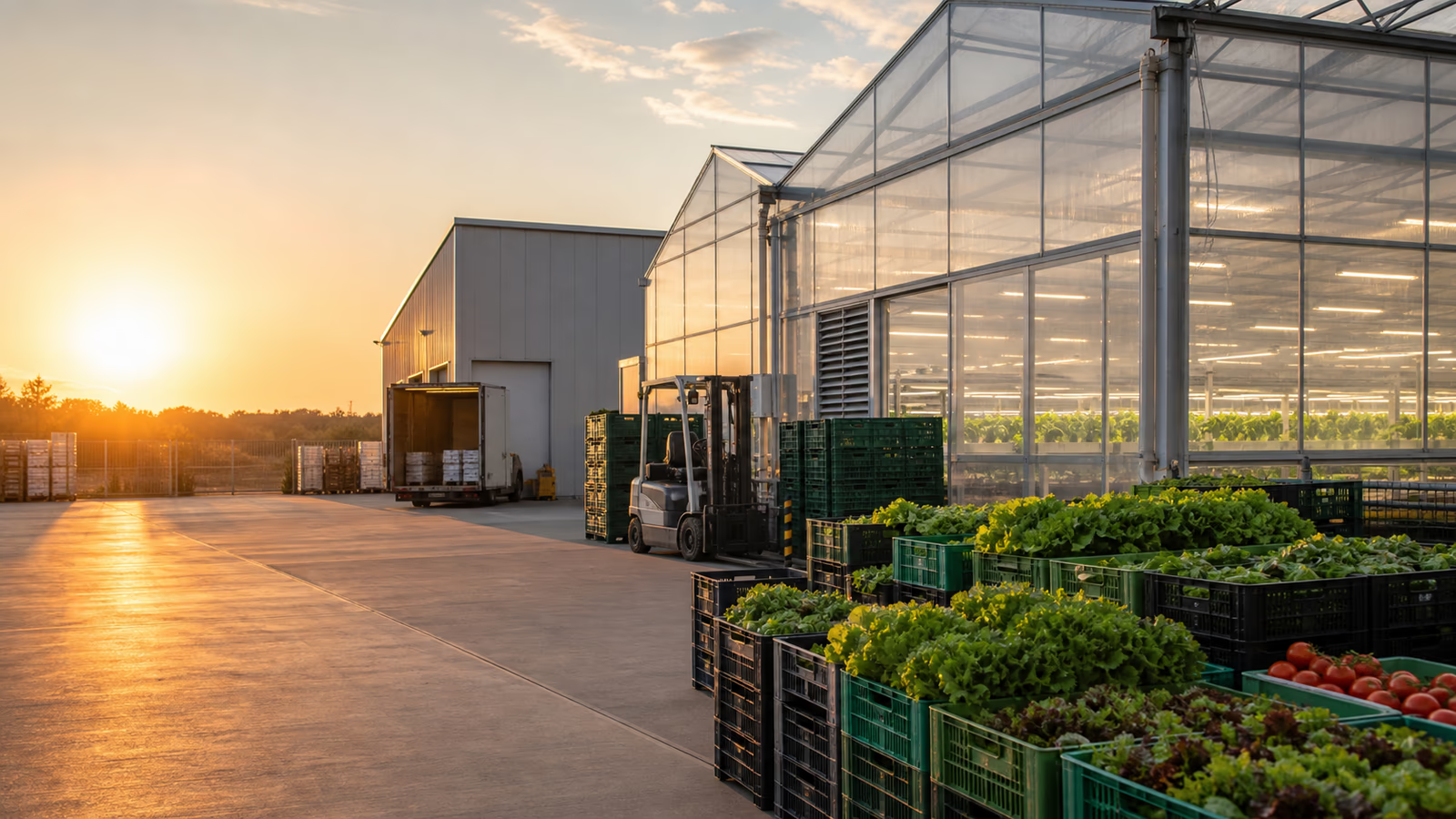
Food security sounds almost boring until a real shock hits. Then it becomes obvious that grain, feed, fertilizer, edible oils, and the systems that move them are not side issues. They are the floor under everything else.
Israel does not need to produce every calorie at home to become safer. It does need more slack in the system. More storage, more controlled production, better logistics, and more substitutes mean fewer moments where a shipping delay or labor disruption turns into a national problem.
That is why this priority is not really about farming in the narrow sense. It is about the whole operating system around food: reserves, greenhouse capacity, protein alternatives, fertilizer access, cold chain reliability, warehouse automation, and the ability to keep shelves and institutions supplied when the environment gets rough.
What pressure is this solving?
This priority is driven by concrete points of dependency that are already visible in the atlas. The goal is not abstract independence. The goal is to remove the narrowest bottlenecks first, then build more room to operate when the system is under stress.
Grain security imports
Staple grain imports matter for bread, feed, and strategic stocks.
- Vulnerability
- 70
- Importance
- 89
- Category
- Food
Grain security imports
Staple grain imports matter for bread, feed, and strategic stocks.
- Vulnerability
- 65
- Importance
- 88
- Category
- Food
Feed and oilseed inputs imports
Feed and oilseed import dependence hits food prices and livestock resilience.
- Vulnerability
- 64
- Importance
- 80
- Category
- Food
Protein imports imports
Protein imports supplement domestic supply and become more sensitive during mobilization shocks.
- Vulnerability
- 64
- Importance
- 77
- Category
- Food
What should the capital actually fund?
A useful resilience investment thesis needs to be concrete. These are the moves the atlas points to for this theme.
- Build rotating strategic grain, feed, fertilizer, and edible-oil reserves with freshness and release rules.
- Back greenhouse, desert-farming, alternative protein, seed, and feed-tech capacity where domestic output can scale inside 36 months.
- Automate packhouses, cold-chain, water-efficient farms, and food logistics so labor or route shocks do not halt distribution.
Why can this make money?
This is investable because the same products that improve resilience in Israel also solve commercial problems in many other markets. Water-efficient agriculture, automated food handling, resilient cold chain software, and alternative feed inputs all travel well. They are useful in hot climates, labor-constrained markets, and supply chains that cannot afford waste.
Put simply, this is a category where strategic value and business value can line up. The demand is real, the customer pain is obvious, and the case for adoption gets stronger every time global shipping or commodity markets become unstable.
How to use this case responsibly
Treat this page as an editorial bridge between the Dependency Atlas and company-level diligence. It identifies a strategic pressure point, explains why the pressure may create durable demand, and points to the kinds of capabilities that could reduce dependency. It does not rank securities, confirm current fundraising, endorse any company, or imply that a reader can access a specific allocation.
Before relying on the theme, check the cited dependency records, compare the suggested actions with current procurement and commercial demand, and separate companies with verified traction from companies that are only adjacent to the problem. The strongest opportunity is usually not the company with the loudest resilience language. It is the one with a clear buyer, defensible technical proof, reliable delivery economics, and a role that remains useful when the original scenario changes.
Use the score and rank as a starting point, then test whether the proposed capability would still matter if the dependency source, timing, or severity changed. A resilient thesis should survive more than one scenario and should be supported by sources that readers can inspect directly.
Bottom line
If an investor wants exposure to a theme that is basic, durable, and easy to explain, food and feed resilience deserves real attention.