
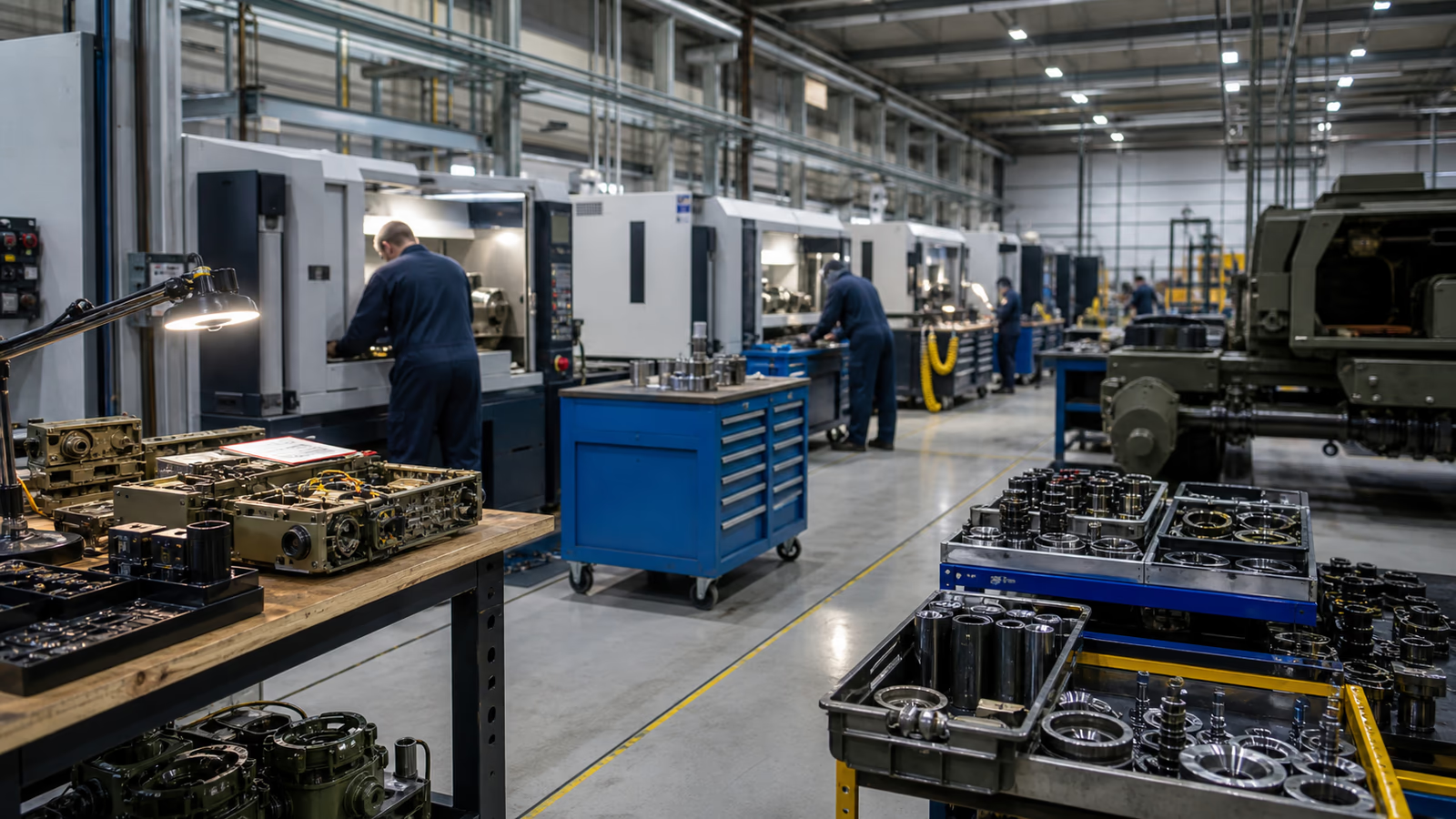
Military strength is not only about having advanced systems. It is about whether those systems can be replenished, repaired, and sustained when the conflict lasts longer than anyone hoped.
That is why the Atlas gives such a high rank to defense-industrial depth. Israel already has a formidable defense base, but it still faces bottlenecks in munitions supply, spare parts, propulsion, maintenance, and surge manufacturing. Those bottlenecks matter most in long campaigns, exactly when outside approvals and delivery schedules become harder to rely on.
The investment logic is practical. Back the factories, component makers, repair capacity, depot systems, and dual-use production lines that increase local throughput. Back the companies that shorten turnaround time, reduce dependence on a single outside source, and make it easier to keep systems in the field.
What pressure is this solving?
This priority is driven by concrete points of dependency that are already visible in the atlas. The goal is not abstract independence. The goal is to remove the narrowest bottlenecks first, then build more room to operate when the system is under stress.
Foreign military financing and major U.S. defense system access
Israel still relies on the United States for recurring FMF, missile-defense funding, and privileged access to high-end combat systems.
- Vulnerability
- 83
- Importance
- 98
- Category
- Defense
Air-defense interceptors, spare parts, and aviation sustainment
Air-defense depth and high-tempo aviation sustainment remain materially tied to U.S. production lines and approvals.
- Vulnerability
- 81
- Importance
- 95
- Category
- Defense
Aircraft and aviation parts imports
Aviation platforms and parts create long-tail dependence even in an advanced domestic aerospace base.
- Vulnerability
- 77
- Importance
- 95
- Category
- Defense
Aircraft and aviation parts imports
Aviation platforms and parts create long-tail dependence even in an advanced domestic aerospace base.
- Vulnerability
- 76
- Importance
- 90
- Category
- Defense
What should the capital actually fund?
A useful resilience investment thesis needs to be concrete. These are the moves the atlas points to for this theme.
- Add surge-capacity lines for expendables, interceptors, energetics, batteries, propulsion, and high-rotation parts.
- Deepen local depot, repair, refurbishment, additive manufacturing, and qualified second-source capacity.
- Align procurement to dual-use factories that can switch from commercial output to defense sustainment under fire.
Why can this make money?
This theme can produce commercial outcomes because sustainment is not a niche afterthought. It is a large and recurring market. Militaries pay for readiness. Primes pay for dependable suppliers. Civil sectors also buy propulsion components, ruggedized electronics, maintenance software, and manufacturing tools that were first justified by defense demand.
The best businesses in this category will be the ones that combine strategic necessity with repeatable production economics. Investors do not need to choose between national value and business discipline if the company is solving a real throughput problem.
How to use this case responsibly
Treat this page as an editorial bridge between the Dependency Atlas and company-level diligence. It identifies a strategic pressure point, explains why the pressure may create durable demand, and points to the kinds of capabilities that could reduce dependency. It does not rank securities, confirm current fundraising, endorse any company, or imply that a reader can access a specific allocation.
Before relying on the theme, check the cited dependency records, compare the suggested actions with current procurement and commercial demand, and separate companies with verified traction from companies that are only adjacent to the problem. The strongest opportunity is usually not the company with the loudest resilience language. It is the one with a clear buyer, defensible technical proof, reliable delivery economics, and a role that remains useful when the original scenario changes.
Use the score and rank as a starting point, then test whether the proposed capability would still matter if the dependency source, timing, or severity changed. A resilient thesis should survive more than one scenario and should be supported by sources that readers can inspect directly.
Bottom line
In plain terms, this is investment in staying power. That is often less glamorous than breakthrough weapons, but in real conflicts it can matter more.